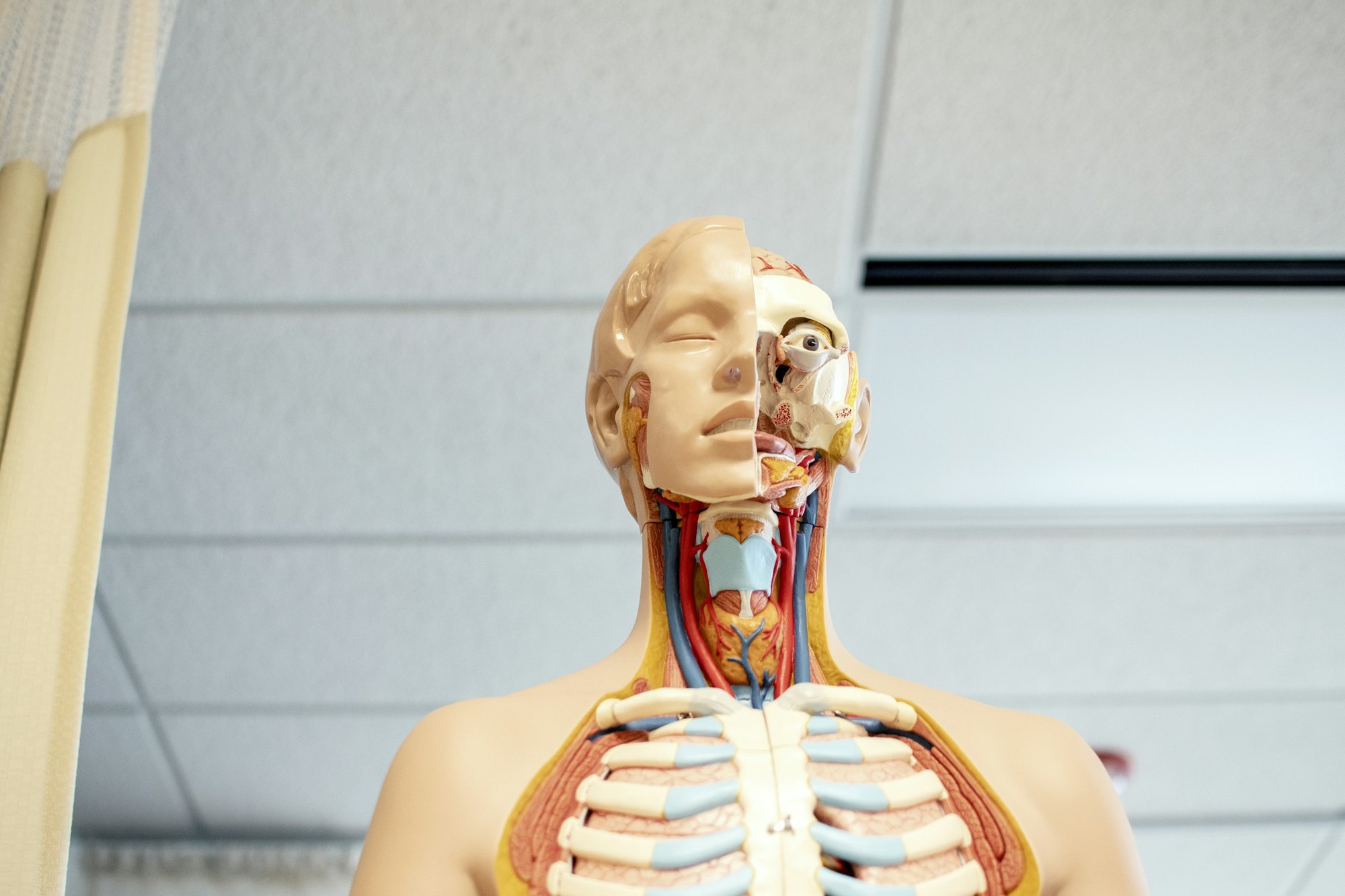
International medical schools teach the same core subjects as US medical schools: basic sciences such as anatomy, physiology, biochemistry, and pharmacology, followed by clinical training in the major specialties. What differs is the structure. Some schools follow a four-year, US-style MD program after a bachelor's degree, while others run five- or six-year programs that start after high school and include foundational science courses. Many also add language courses and exam preparation tailored to where graduates plan to practice.
Here is what you can expect to study, year by year, the entry requirements for these programs, and how to compare curricula between schools.
The two big phases
Nearly every medical curriculum, anywhere in the world, has two phases:
- Preclinical (basic sciences). Classroom, lab, and small-group learning about how the body works and how disease develops.
- Clinical. Hands-on training in hospitals and clinics under supervision, rotating through different specialties.
In a four-year MD, the preclinical phase usually takes one and a half to two years. In a six-year program, it often takes two to three years, partly because students start with less science background.
Core preclinical courses
These subjects appear in almost every program, though schools may combine them into organ-system blocks rather than teaching them separately:
- Anatomy, often with cadaver dissection or prosection
- Histology and cell biology
- Physiology
- Biochemistry and molecular biology
- Genetics
- Microbiology and immunology
- Pathology and pathophysiology, which explain how normal function breaks down in disease
- Pharmacology
- Neuroscience
- Behavioral science and psychiatry basics
- Epidemiology, biostatistics, and public health
- Medical ethics and professionalism
- Clinical skills, such as taking a history, physical examination, and communication with patients
Many schools now use an integrated, systems-based curriculum. Instead of a full semester of physiology, you might study a cardiovascular block that covers the anatomy, physiology, pathology, and pharmacology of the heart together. Depending on the curriculum, a subject may be taught in a single semester or spread across several years.
Clinical rotations
The clinical phase is built around core rotations (sometimes called clerkships). Typical core rotations include:
| Core rotation | What you learn |
|---|---|
| Internal medicine | Diagnosis and management of adult diseases |
| Surgery | Surgical patients, operating room basics, pre- and post-operative care |
| Pediatrics | Care of infants, children, and adolescents |
| Obstetrics and gynecology | Pregnancy, childbirth, and women's health |
| Psychiatry | Mental health assessment and treatment |
| Family medicine or general practice | Primary care in the community |
| Neurology | Disorders of the brain and nervous system (core at some schools) |
| Emergency medicine | Acute care (core at some schools, elective at others) |
After core rotations, students choose electives in areas like cardiology, radiology, dermatology, anesthesiology, or infectious disease. Electives let you explore specialties and, for students aiming at US residency, earn letters of recommendation.
How curricula differ by region
Caribbean schools focused on the US usually mirror the US MD structure. Students complete basic sciences on the island, take USMLE Step 1, then do clinical rotations at affiliated hospitals in the US or other countries. Courses are often designed to align with USMLE content.
European six-year programs start after high school. The first year may include general biology, chemistry, physics, and Latin or medical terminology. Students often take courses in the local language so they can talk with patients during clinical years. Clinical training happens in local teaching hospitals. In many Central and Eastern European schools, and in countries such as Germany, the final year is a practical or internship-style year spent almost entirely on hospital wards, where students take on more hands-on and procedural work under supervision. It is usually unpaid and counts as part of the degree.
UK and Irish programs combine science teaching with early patient contact and may include an intercalated year, where students earn an extra degree in a subject like research or public health.
Graduate-entry programs (for example, in Australia) assume a prior degree and move faster through the basic sciences.
Two well-known examples show the contrast. Charles University in Prague offers a six-year, English-taught general medicine program in the European style, while St. George's University in Grenada runs a four-year, US-style MD with clinical rotations largely in the US and UK. You can compare program formats and lengths in our programs directory.
Entry requirements for these courses
Requirements depend on the program format, so check each school directly:
- Science background. Most schools expect at least two science subjects, almost always chemistry and often biology. Physics and mathematics are common extras.
- Admission tests. Graduate-entry programs in Australia, the UK and Ireland often require the GAMSAT (Graduate Medical School Admissions Test). Undergraduate-entry programs in the UK and Australia commonly use the UCAT, and US-style Caribbean schools usually ask for the MCAT. Many European schools set their own entrance exam in biology and chemistry.
- Language. English-taught programs usually ask for proof of English proficiency if it is not your first language.
- Interviews. Many schools interview shortlisted applicants, in person or online.
Admission to some schools abroad can be less competitive than admission to a US program, but entry is still selective and requirements change. Contact each school for its current rules.
Extra courses you may see
International schools often add courses that domestic schools do not, such as:
- Local language instruction, required at many European schools by the clinical years
- USMLE preparation, built into the curriculum or offered as review courses
- Global health and tropical medicine, especially at schools in regions where these diseases are common
- Research methods, sometimes with a required thesis (common in Europe)
- Medical humanities, covering history, ethics, and communication
- Simulation training, using mannequins and standardized patients
How you are assessed
Assessment methods vary, so ask schools about them:
- Written exams with multiple-choice questions, often modeled on licensing exams
- Oral exams, which are common in Central and Eastern Europe
- Objective Structured Clinical Examinations (OSCEs), where you rotate through stations with actors playing patients
- Clinical evaluations by supervising doctors during rotations
- Thesis or research projects
If you plan to take the USMLE, a school whose exams use a similar format can make preparation easier.
How the curriculum connects to licensing exams
Where you plan to practice should shape how you judge a curriculum. USMLE Step 1 tests the basic sciences, and Step 2 CK tests clinical knowledge from the core rotations. A school built around the US system will usually schedule a dedicated study period before Step 1 and align its course exams with USMLE-style questions.
European and Asian programs are designed first for their own national licensing systems. Students there who want US residency often study for the USMLE on their own, alongside a full course load. That is very doable, but it takes planning. Ask how many students at the school take the USMLE each year and how they perform.
What to ask when comparing curricula
- Is the curriculum systems-based or subject-based?
- When does patient contact begin? Early clinical exposure helps many students.
- Where do clinical rotations take place? In which hospitals and countries, and in what language?
- Are core rotations guaranteed, or do students have to arrange them?
- How does the school prepare students for licensing exams in the countries where graduates want to practice?
- What are first-time pass rates on those exams?
- How much elective time is there?
The curriculum is only part of the picture. Faculty quality and accreditation shape how well it is taught. See our article on requirements for faculty at international medical schools, and check how graduates do in obtaining residency and further training.
A note on recognition
A good curriculum will not help you if your degree is not recognized where you want to work. When you graduate from a school outside the country where you want to practice, you will be considered an international medical graduate (IMG) there.
- United States. You must pass the USMLE Step exams and earn certification from the Educational Commission for Foreign Medical Graduates (ECFMG). Check that your school is listed in the World Directory of Medical Schools and that its accreditor is recognized by WFME or the US NCFMEA, which ECFMG's parent organization, Intealth, uses in its accreditation policy.
- United Kingdom. Doctors who qualify outside the UK usually need to pass the Professional and Linguistic Assessments Board (PLAB) test or use another approved route before registering with the General Medical Council. This applies to UK citizens who studied abroad too, though different rules have applied to some European qualifications.
- US federal loans. A foreign university may take part in US federal student aid while its medical program does not, and foreign medical schools must report outcomes each year to stay eligible. Ask the school whether the medical program itself is approved.
Check the rules of any other country where you might practice.
Key takeaways
- International medical schools teach the same core subjects as US schools, from anatomy and physiology to pharmacology and pathology.
- Programs split into a preclinical phase and a clinical phase with core rotations in internal medicine, surgery, pediatrics, OB/GYN, psychiatry, and family medicine.
- Six-year programs that start after high school add foundational sciences; four-year programs assume a bachelor's degree.
- Many schools add local language courses, USMLE preparation, research requirements and, in parts of Europe, a final practical year.
- Expect science prerequisites, usually chemistry and biology, plus an admission test such as the GAMSAT, UCAT, MCAT or a school exam.
- Ask where clinical rotations happen, in what language, and how students perform on licensing exams.